
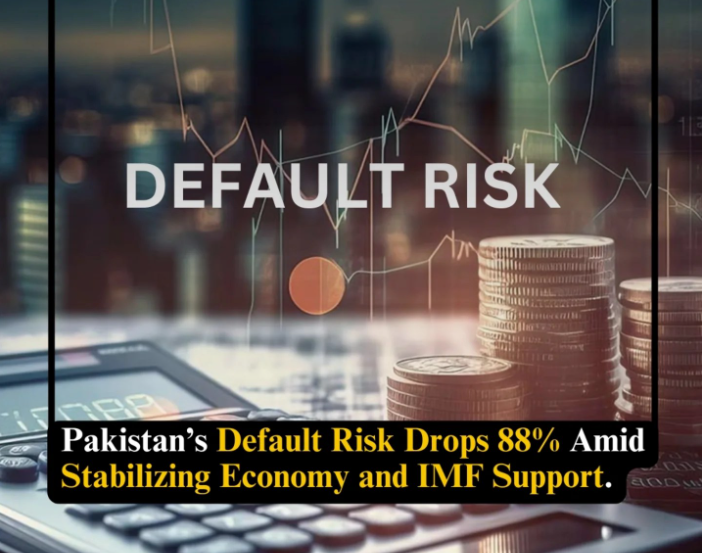
Pakistan’s perceived risk of default has significantly eased, with its five-year credit default swap (CDS) spreads plummeting by an impressive 88% to 1,493 basis points (bps) from their peak in November 2022, according to brokerage firm Topline Securities. Pakistan default risk marked decline signals growing investor confidence, spurred by improving macroeconomic stability and a healthier external account.
The country’s foreign exchange reserves have risen to over $12 billion as of December 2024, a dramatic recovery from the precarious low of $2.9 billion in February 2023. These developments suggest a cautiously optimistic outlook for Pakistan’s economic stability, which has been under strain due to years of external debt obligations and fluctuating policy directions.
But what does this mean for the nation’s economic trajectory? Former equities and treasury fund manager Karim Punjani explained that while Pakistan’s elevated CDS spreads mirror global trends seen during the COVID-19 pandemic, the country’s political instability has uniquely amplified its vulnerabilities. “Political concerns are a key differentiator for Pakistan,” he said, pointing to the disproportionate impact of governance challenges on investor perceptions.
Miftah Ismail, Pakistan’s former finance minister, whose tenure was marked by navigating the risk of default, welcomed the improvement. “It’s great to see the risk come down so much. I hope it stays low,” he remarked, adding that the overall trajectory of CDS spreads provides valuable insights into market expectations and the types of policies required for sustained economic credibility.
Ismail further linked political events to shifts in CDS spreads, noting that the spike in October 2022 occurred around his removal from office and the public discord between Ishaq Dar, now a deputy minister, and the IMF. “The risk began to ease in mid-2023 after Pakistan secured an IMF agreement and continued to decline into 2024, signaling confidence in the country’s commitment to structural reforms,” he stated.
Khurram Schehzad, adviser to the finance minister, highlighted the strategic opportunities created by the declining country risk premiums in a post on X. “This is the moment for Pakistan to plan a return to global capital markets. With global interest rates softening, we can benefit from lower borrowing costs and increased liquidity, which will alleviate external pressures, strengthen our position, and improve economic prospects,” he wrote.
Punjani noted that while the recent improvements are encouraging, there remains room for further progress. “CDS spreads are still above pre-COVID levels, which were around 400–450 bps,” he observed. He added that despite ongoing structural challenges, the current situation is a far cry from the crisis-level risks posed during Pakistan’s peak political turmoil.
Experts are now urging policymakers to leverage this window of opportunity to implement reforms that address long-standing economic vulnerabilities. From reducing fiscal deficits to bolstering revenue generation and diversifying export markets, the focus must be on ensuring this improvement in CDS spreads translates into sustainable economic growth. Furthermore, timely engagement with multilateral lenders and consistent communication with global investors are essential to sustaining this momentum.
As Pakistan navigates its way back to economic stability, these positive indicators serve as a reminder that prudent policies, coupled with political stability, can significantly influence investor confidence and reshape the country’s financial narrative.