
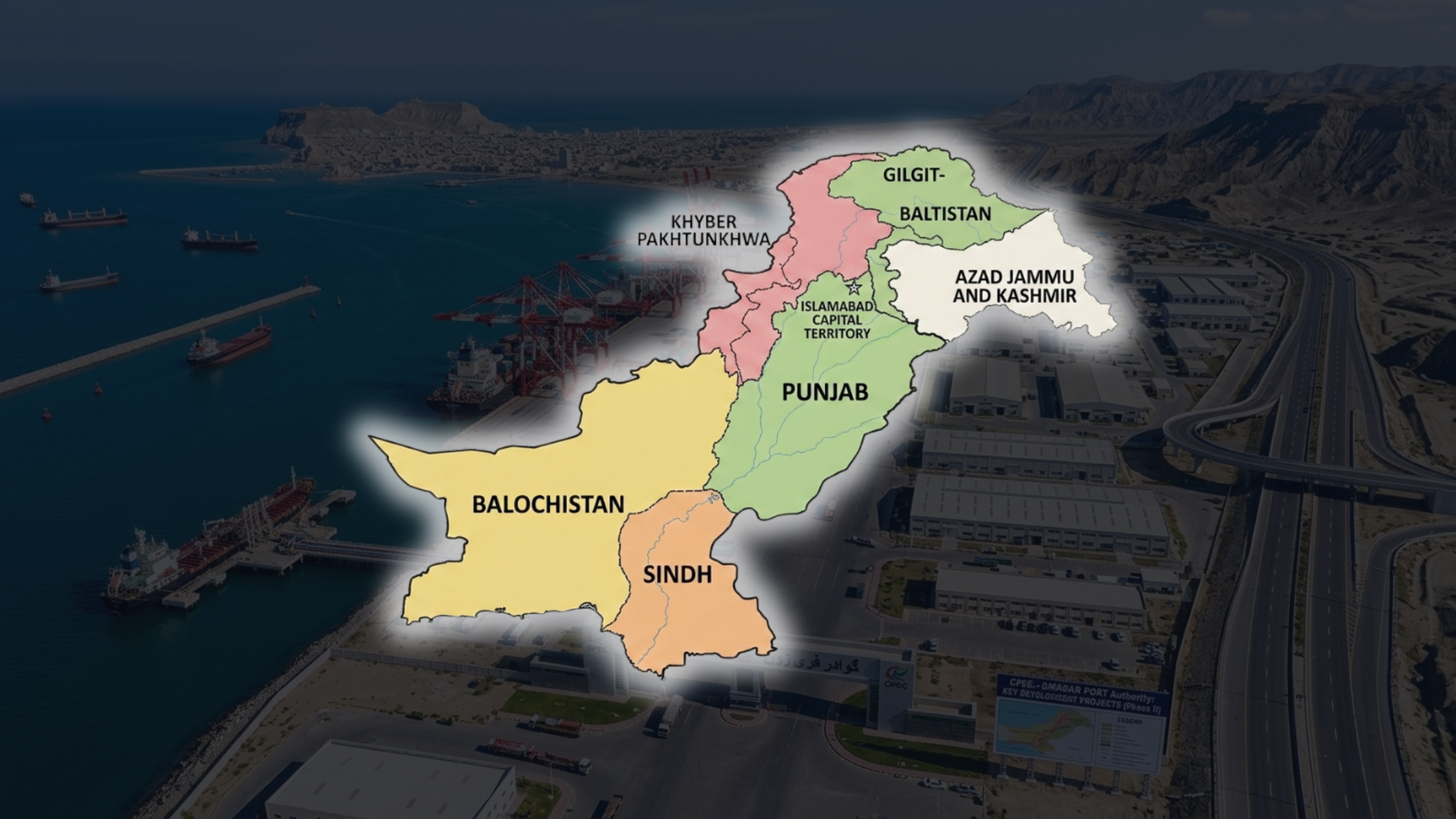
Pakistan could potentially face a major administrative restructuring if the proposals described in the source material move forward. The reported ideas include turning Karachi and Gwadar into federally managed mega-hubs, dividing large provinces such as Punjab and Khyber Pakhtunkhwa (KP) into smaller provinces, and reconsidering existing regional boundaries.
The central argument behind these proposals is that Pakistan’s current administrative structure may no longer be suitable for the country’s growing population, economic needs and governance challenges. Smaller administrative units could, in theory, allow governments to focus more closely on local issues and reduce the bureaucratic delays associated with managing extremely large provinces.
Karachi and Gwadar as Federal Hubs
One of the most significant proposals involves placing Karachi and Gwadar under stronger federal management. Both cities have major economic and strategic importance, particularly because of their roles in trade, ports, transportation and investment.
Supporters of such an approach could argue that federal oversight would allow these economic centers to receive more coordinated planning and investment. However, reducing the role of provincial or local authorities would also be politically sensitive and could trigger concerns over representation and local control.
Dividing Punjab and KP
Another proposal focuses on breaking larger provinces into smaller administrative units. Punjab, Pakistan’s most populous province, and KP are specifically mentioned in the proposed restructuring.
The argument is that smaller provinces could make government administration more manageable. Local authorities would potentially have a closer understanding of regional needs, while development funds and public services could be distributed according to more localized priorities.
However, creating new provinces would require agreement on boundaries, resources, administrative capitals, political representation and financial arrangements.
Pakistan Unveils Two New Long-Range Loitering Munitions at 2026 Defence Expo
15-Year-Old Pakistani Girl Sets Global ACCA Record
Norway FM’s Historic Visit to Pakistan: Jobs, Green Energy & Major Trade Deals
Why Is There a Push for Change?
The proposals are reportedly linked to concerns that Pakistan’s existing administrative model has become outdated. The country’s governance structure has faced challenges involving population growth, urban expansion, public-service delivery and regional development.
Advocates of smaller administrative units believe that decentralization could make government more responsive. Instead of decisions being concentrated far from smaller cities and communities, new administrative units could potentially bring decision-making closer to citizens.
The expected benefits include faster development planning, improved security coordination and more localized budgets.
The Economic Argument
A major part of the debate revolves around money and development.
Supporters argue that smaller provinces could give regions greater control over their economic resources and development priorities. Instead of competing with large populations and numerous districts for provincial funding, smaller units could potentially direct more resources toward their own infrastructure and public-service needs.
The idea is particularly important for major economic centers such as Karachi and Gwadar, where proponents could argue that their economic importance requires specialized administrative structures.
However, dividing provinces would also create additional governments, departments and administrative institutions. That could increase costs rather than reduce them unless the restructuring is carefully planned.
Could New Borders Improve Governance?
Redrawing administrative boundaries is often presented as a way to reduce bureaucratic red tape.
Large provinces can be difficult to administer because of geographical distance, population size and differences between regions. Smaller units could theoretically allow governments to monitor development projects more closely and respond faster to local problems.
But new borders alone would not automatically solve governance problems. Effective institutions, transparent budgeting, capable local administrations and accountability would still be necessary.
The Political Challenge
The biggest obstacle may not be administrative—it could be political.
Provincial boundaries are closely connected to political representation, economic resources and regional identity. Any proposal to divide Punjab or KP, or to change the administrative status of major cities, would likely generate intense political debate.
Political parties could disagree over which areas should form new provinces, where their capitals should be located and how resources should be distributed.
For this reason, any major restructuring would require broad political consensus rather than simply an administrative decision.
What Could Happen to Karachi and Gwadar?
Karachi and Gwadar occupy particularly important positions in Pakistan’s economy and strategic planning.
Karachi is the country’s largest urban and commercial center, while Gwadar has strategic importance because of its deep-sea port and connection to regional trade initiatives.
Giving either city a stronger federal administrative role could potentially improve coordination over infrastructure, investment and strategic development. At the same time, such a move could raise questions about the authority of provincial and local governments.
The success of any such arrangement would therefore depend heavily on how responsibilities and financial powers are divided.
A Possible Administrative Reset
At its core, the reported proposal represents a broader debate about whether Pakistan needs to rethink its administrative structure.
Supporters see smaller provinces, stronger local administration and federally coordinated economic hubs as possible solutions to long-standing governance problems.
Critics, however, could argue that changing borders without first improving institutions would simply create a new administrative structure without addressing the underlying problems.
The debate is therefore not only about drawing new lines on a map. It is also about deciding where political power should sit, how resources should be distributed and how governments should deliver services to citizens.
Will Pakistan Actually Redraw Its Map?
For now, the material provided describes these ideas as proposals and discussions, not as an implemented restructuring of Pakistan’s provinces. The source does not establish that final decisions have been made or that new provincial boundaries have officially been approved.
If such proposals advance, they would likely become one of the country’s most politically consequential administrative debates.
Would you support breaking Pakistan’s larger provinces into smaller units, or would redrawing provincial boundaries create more political problems than it solves? Share your thoughts below.