
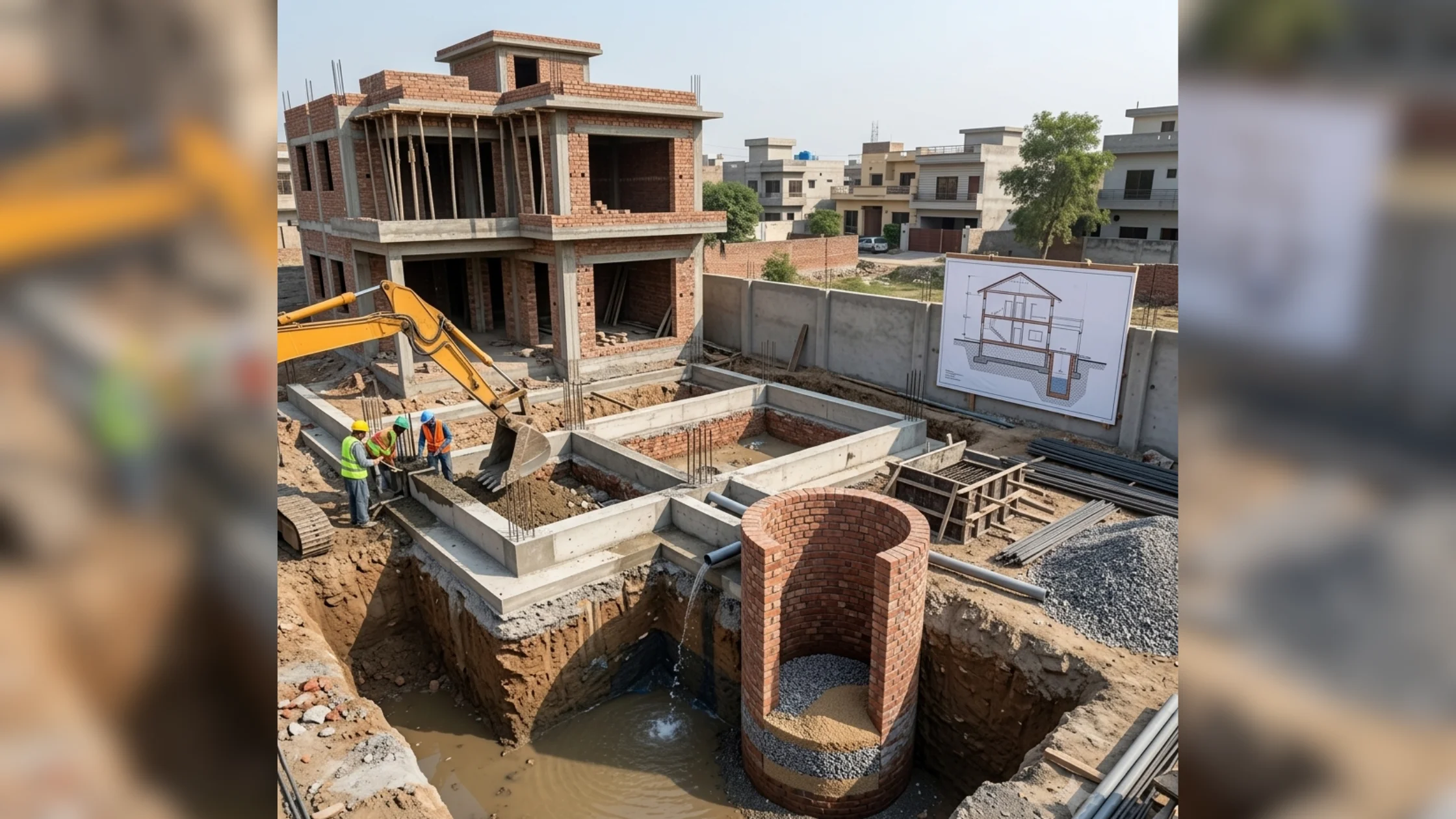
The Punjab government is preparing to introduce a new policy that would make recharge wells compulsory for all newly constructed houses across the province. The initiative, proposed by the Punjab Water and Sanitation Authority (WASA), is aimed at restoring groundwater levels, improving water sustainability, and reducing the impact of water shortages caused by rapid urban development.
According to WASA Director General Tayyab Fareed, the proposal will be presented for approval at the authority’s upcoming meeting. If approved, every new residential construction will be required to include a recharge well, allowing rainwater to seep back into the ground instead of being wasted through drainage systems.
The announcement is part of a broader effort to modernize Punjab’s water and sanitation infrastructure. The newly established WASA network now consists of 41 Water and Sanitation Agencies, working to improve access to clean drinking water, strengthen sewerage systems, and enhance sanitation services throughout the province.
To support these efforts, WASA has procured 272 modern operational vehicles, while the purchase of 969 additional machines and specialized equipment is currently in progress. The authority is also overseeing Rs. 205 billion worth of development projects in 15 major cities, focusing on water supply improvements, drainage systems, flood prevention, and urban infrastructure.
During the next fiscal year, Punjab plans to install 2,265 kilometers of sewerage pipelines, construct 89 disposal stations, develop 189 kilometers of storm-water drains, and build nine underground water storage tanks. These projects are expected to improve public services while making cities more resilient to heavy rainfall and water-related challenges.
The proposed recharge well policy reflects Punjab’s long-term commitment to sustainable water management and environmental protection, ensuring that future urban development contributes to preserving the province’s valuable groundwater resources.