

Introduction: Why Power Rankings Matter in 2025
Every few years, debates about which nations are the world’s most powerful countries resurface. Power today is no longer just about the size of an army or how much oil a nation produces. It’s about how a country blends military might with economic strength, diplomatic alliances, and cultural influence.
In 2025, the rankings show how shifting economies, growing defense budgets, and evolving alliances are shaping the modern global order. These rankings reveal not just who leads today, but who might dominate tomorrow.
The Criteria: How Forbes Measures Global Power
Forbes evaluates the world’s most powerful countries in 2025 using five equal factors:
- Leadership: The ability of national leaders to influence globally.
- Economic Strength: GDP size, trade impact, and technological reach.
- Political Reach: Diplomatic ties and soft power presence.
- Alliances: Strategic partnerships like NATO, BRICS, or bilateral deals.
- Military Capability: Defense budgets, technology, and global presence.
This balance ensures rankings reflect both hard and soft power.
Top 10 Historical Places in Pakistan That You Must Visit
Top 10 Brokerage Firms in Pakistan (2025-2026) | A Complete Guide for Investors
Top 5 Largest Museums in the World
Top 5 world’s best airport: A Deep Dive into the Top Airports on the Planet
1. United States: Still the Global Superpower
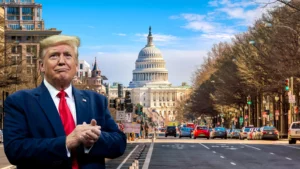
The United States continues to lead the list of the world’s most powerful countries in 2025.
- Economy: With a GDP of nearly $30.3 trillion, the U.S. remains the largest economy in the world. Its influence stretches across finance, technology, trade, and innovation.
- Military: America spent $997 billion on defense in 2024, more than the next ten countries combined. Its global network of bases, advanced weapons, and nuclear stockpile keep it unrivaled.
- Leadership & Culture: From Hollywood to Silicon Valley, U.S. cultural exports shape global narratives. Politically, Washington continues to anchor NATO and lead major international coalitions.
The U.S. maintains its edge because it doesn’t just rely on military strength but integrates culture, economics, and alliances into a complete power package.
2. China: The Rising Giant
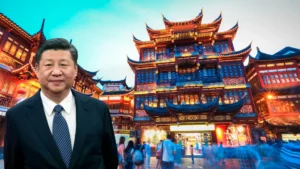
China ranks second, reinforcing its position as the main challenger to U.S. dominance.
- Economy: With a GDP of $19.5 trillion, China drives manufacturing, exports, and infrastructure development worldwide.
- Military: Official spending was $229 billion in 2024, but analysts suggest real figures are closer to $314 billion. China’s navy now rivals the U.S. in size, and its missile capabilities are expanding rapidly.
- Global Reach: Through the Belt and Road Initiative, China has secured influence in Asia, Africa, and parts of Europe.
Beijing blends economic strategy with military modernization, making it one of the world’s most powerful countries in both influence and ambition.
3. Russia: Military Might and Energy Leverage
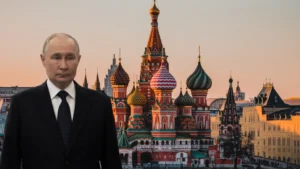
Russia may have a smaller economy, but it ranks third in power.
- Economy: Around $2.2 trillion GDP, much smaller than the U.S. or China.
- Military: Spent about $109 billion in 2024, but its nuclear arsenal is the world’s largest, making it a military superpower.
- Energy Exports: Europe and Asia still depend heavily on Russian oil and gas, giving Moscow leverage in geopolitics.
Despite sanctions and isolation, Russia continues to project influence far beyond its borders.
4. United Kingdom: Soft Power Meets Hard Power
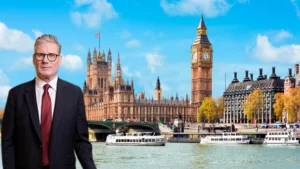
The United Kingdom ranks fourth.
- Economy: A GDP of $3.73 trillion makes it one of the strongest in Europe.
- Military & Diplomacy: As a founding NATO member and nuclear power, Britain plays a critical role in global defense. Its “special relationship” with the U.S. boosts its influence further.
- Culture: London remains a hub for finance, education, and media.
The UK proves that both tradition and innovation keep it relevant among the world’s elite powers.
5. Germany: Europe’s Power Center
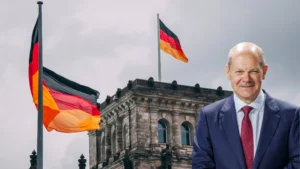
Germany stands at number five, leading Europe’s economic engine.
- Economy: With a GDP of $4.92 trillion, Germany dominates in industry, exports, and technology.
- Political Influence: As the EU’s largest economy, Berlin drives European policy on trade, climate, and security.
- Military: While historically restrained, Germany has increased defense spending significantly in recent years.
6. South Korea: A Technology and Innovation Powerhouse
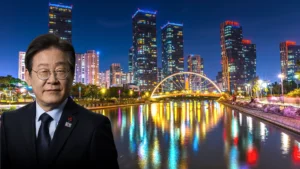
South Korea ranks sixth among the world’s most powerful countries.
- Economy: GDP of $1.95 trillion, built on electronics, shipbuilding, and automotive sectors.
- Military: Strong armed forces supported by U.S. alliance.
- Culture: K-pop and Korean dramas give Seoul unique soft power.
South Korea’s blend of technology and culture makes it far more influential than its size suggests.
7. France: Global Diplomacy and Historic Influence

France holds the seventh spot.
- Economy: GDP of $3.28 trillion.
- Military: One of the largest in Europe, with nuclear weapons and strong global presence.
- Diplomacy: Paris is often the mediator in global conflicts and a leader in climate action.
8. Japan: Economic Titan with Technological Leadership

Japan, at eighth, is a powerhouse in economics and technology.
- Economy: GDP of $4.39 trillion, third-largest in the world.
- Trade: Japan leads in automotive, robotics, and electronics.
- Defense: While constitutionally limited, Tokyo has expanded its defense role to counter China.
9. Saudi Arabia: Energy Rich and Geopolitically Strategic
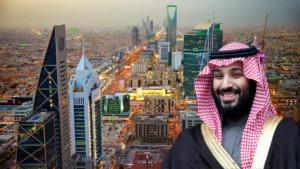
Saudi Arabia ranks ninth.
- Economy: GDP of $1.14 trillion, dominated by oil exports.
- Military & Strategy: Heavy defense spending, combined with Vision 2030 projects, is transforming its role globally.
- Influence: Riyadh wields enormous energy power, shaping OPEC and global oil prices.
Comparing the Top 9 Superpowers
| Rank | Country | GDP (Trillions) | Defense Spending 2024 | Key Strengths |
|---|---|---|---|---|
| 1 | USA | $30.3 | $997B | Economy, Military, Alliances |
| 2 | China | $19.5 | $314B (est.) | Trade, Manufacturing, Growing Military |
| 3 | Russia | $2.2 | $109B | Nuclear Power, Energy Influence |
| 4 | UK | $3.73 | ~$74B | Diplomacy, Finance, Culture |
| 5 | Germany | $4.92 | ~$73B | Economy, EU Leadership |
| 6 | South Korea | $1.95 | ~$50B | Technology, Alliances |
| 7 | France | $3.28 | ~$60B | Diplomacy, Culture, Military |
| 8 | Japan | $4.39 | ~$54B | Innovation, Trade |
| 9 | Saudi Arabia | $1.14 | ~$75B | Energy, Regional Strategy |
Global Defense Budgets in 2024–25
Military budgets underline these rankings.
- Global defense spending reached $2.72 trillion in 2024.
- The U.S. alone accounted for 37% of the world’s total.
- China and Russia followed, with significant growth despite economic pressures.
The Shifting Balance of Power
While the U.S. stays at the top, China is closing in fast. Russia maintains influence through military power, while Germany, the UK, and France ensure Europe remains central in global politics. Saudi Arabia and South Korea highlight how mid-sized economies can punch above their weight through strategy and innovation.
The Future of Global Power Rankings
In the next decade, rankings may shift dramatically. Emerging economies like India, Brazil, and Indonesia could rise. Meanwhile, climate change, digital power, and new technologies may redefine what “power” means.
Conclusion
The world’s most powerful countries in 2025 are not just the biggest militaries or economies. They are nations that combine leadership, alliances, culture, and strategy. From Washington’s dominance to Beijing’s rise, Moscow’s military heft, and Riyadh’s energy leverage—the balance of global power is complex, dynamic, and constantly evolving.
FAQs
1. Which is the most powerful country in 2025?
The United States, with unmatched military, economic, and cultural influence.
2. Why is China second on the list?
Because of its huge economy, growing military, and expanding global influence.
3. How is Russia powerful despite a smaller economy?
Its nuclear arsenal, energy dominance, and military reach make it highly influential.
4. Why didn’t India make the top 10?
It lacks the global alliances and soft power of other nations, despite economic growth.
5. What factors decide a country’s power?
Leadership, economic strength, political influence, alliances, and military capability.